Solutions / Groups & multi-site
Groups & multi-site
Three sites, three tills, and three menus quietly drifting apart.
One account runs every venue: push a change to all sites at once, watch every order from every channel on one hub, and open the next site by cloning one you already run.
Priced per venue · one account, one bill · book a demo for group pricing
Sound familiar?
Site A put the price up last month. Site B never heard. Site C's new line was never added to the till at all.
Why it hurtsMenu drift is invisible until a customer pays two prices at two branches and says so in a review. With a separate system per site, the drift is structural, not carelessness.
Monday morning means three logins, three exports and a spreadsheet to see what actually sold.
Why it hurtsWhen the systems cannot talk to each other, consolidation becomes a person - usually the founder - doing data entry instead of running the group.
Every site has its own tools, its own invoices and its own way of doing things.
Why it hurtsPer-site sprawl multiplies with every opening: one more subscription stack, one more bill to reconcile, one more system to train staff on. The mess scales faster than the revenue.
A day with VenueDeck
Monday, 9:00am
Milk costs moved, so the coffee price has to move at every site. Normally that is a message to three managers, two of whom action it this week and one of whom finds out from a customer.
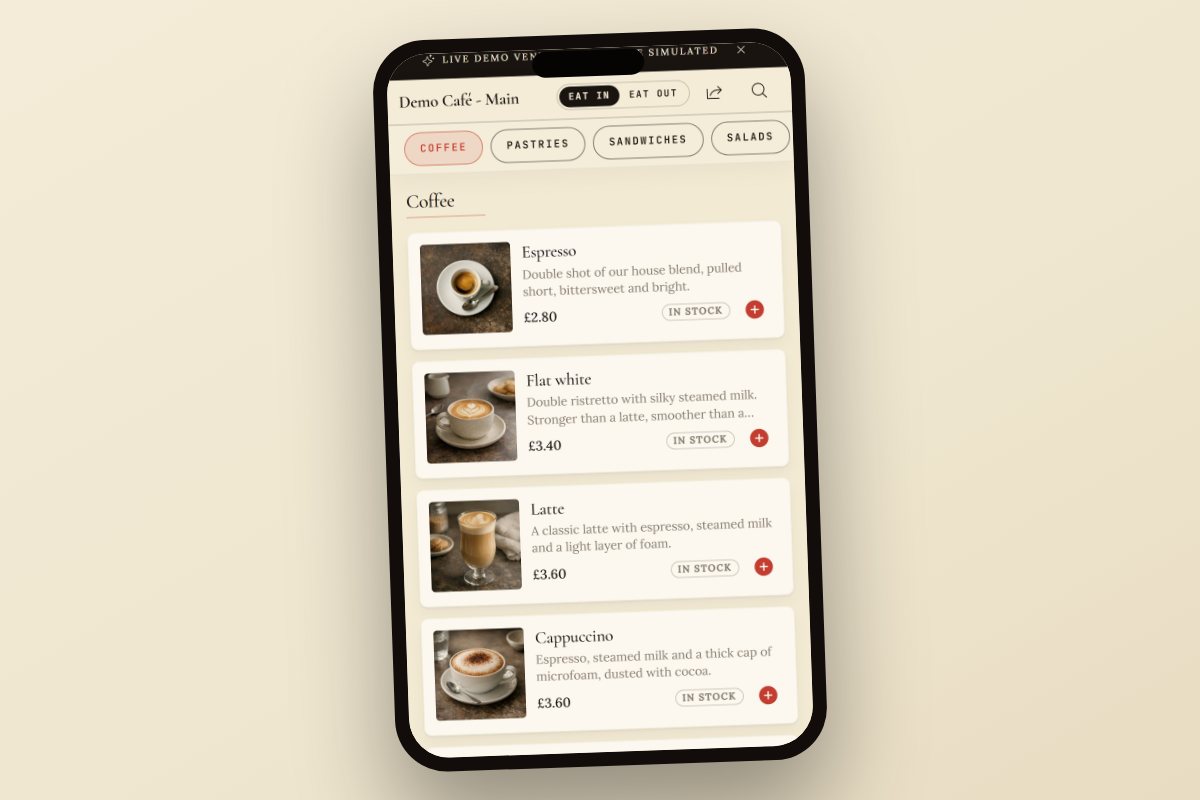
What happens insteadChange the price once at group level and it is live at every venue in the same moment: every menu, every QR, every ordering channel. Venue-level overrides stay available where a site genuinely differs.
The product behind it: QR Menus & Catalogues
Friday, 8:30pm
Three venues are mid-service. Knowing how the night is going means phoning managers who are too busy to answer, and finding out about the problem site tomorrow, from the reviews.
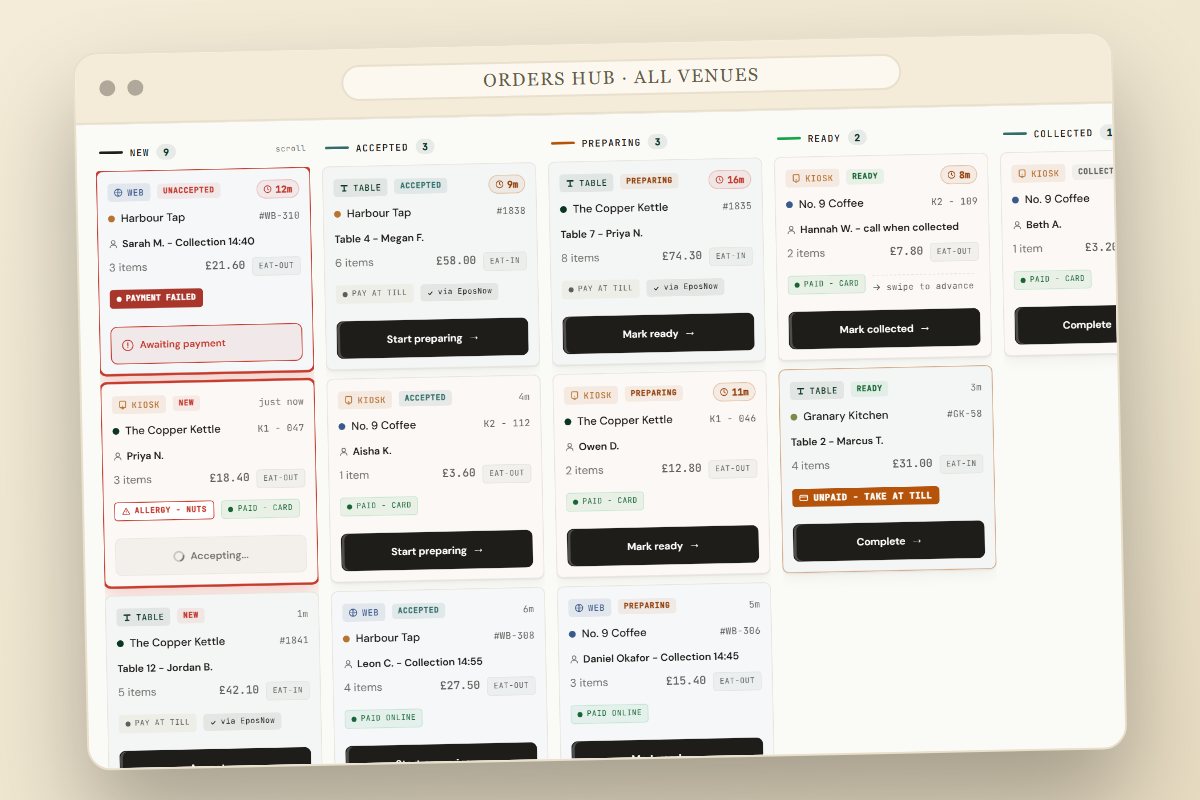
What happens insteadEvery order from every channel of every site is on one hub, live: filter by venue, watch the queues move, and see which kitchen is drowning while there is still time to help.
The product behind it: Orders Hub
Opening week, site four
A new opening usually means building the menu again in whatever till the site inherited, re-keying every price, and training staff on software the other sites do not use.
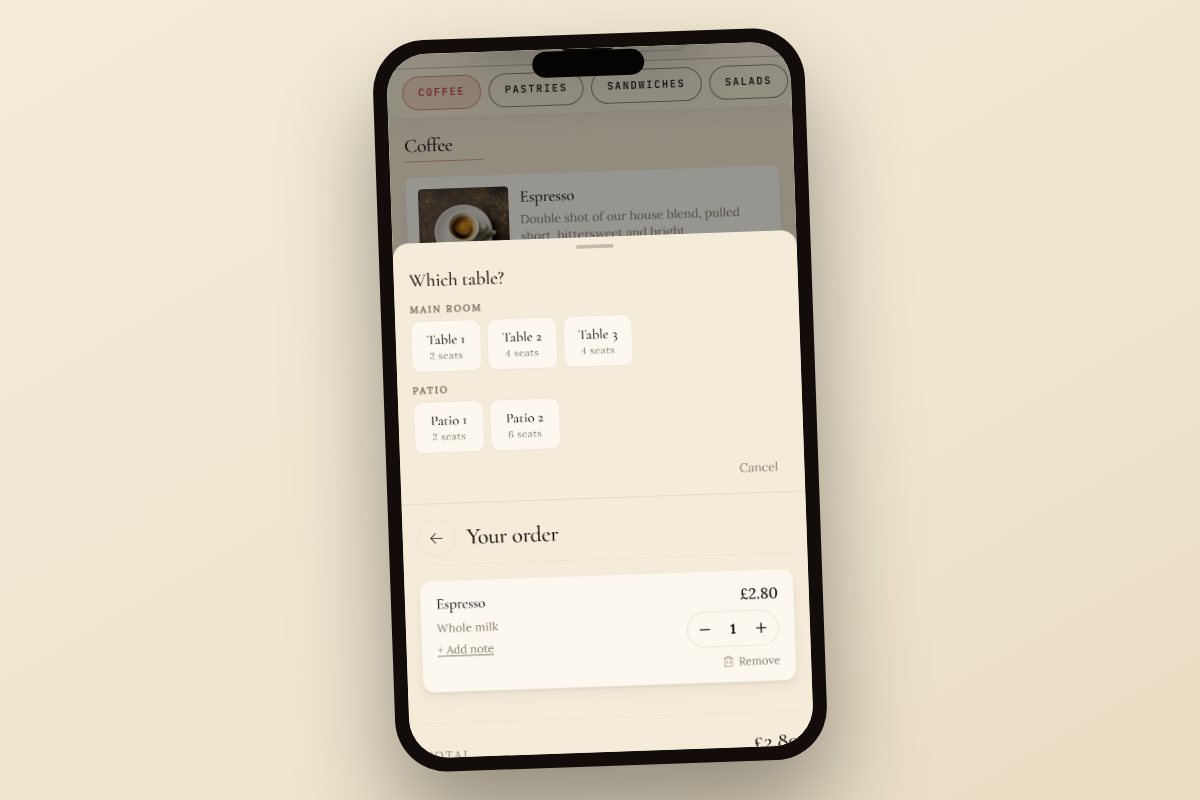
What happens insteadClone an existing venue, adjust what differs, and the same order and pay at table your other sites already run is live before the fit-out is finished. Staff trained at one site are trained at all of them.
The product behind it: Order & Pay at Table
The numbers
every venue, every menu and every order behind a single login, with group-level control and venue-level overrides
per-venue pricing consolidated onto one bill: the estate on one line, not a sign-up per site
phased rollout by design: pilot a single venue, prove it in live service, then roll the rest at your own pace
What it costs for a group
Pricing is per venue, consolidated onto one account and one bill - nobody re-buys the platform per site. Group pricing is agreed at a demo, because a nine-site estate and a three-site estate are different conversations.
Rollout is phased on purpose: start with one venue, even on the free catalogue tier, prove it in live service, then bring the other sites across venue by venue, alongside whatever tills they currently run.
Priced per venue · one account, one bill · book a demo for group pricing
Straight answers
- We are mid-contract on tills at two of the sites.
- That is fine. It sits alongside the tills rather than replacing them, so nothing forces a contract break: roll out venue by venue as each site is ready, and revisit the till estate on its own schedule.
- Central control sounds like taking the sites' autonomy away.
- The catalogue is group-level, the overrides are venue-level. Set the range and the brand centrally, and let each site adjust prices, availability and local lines where it genuinely differs - drift by decision, not by accident.
- Procurement will ask for references from groups like ours.
- Honest answer: VenueDeck is a young product, and we will not pad a logo wall to look older. What we offer instead is a working pilot - one venue live in real service, on your data, before any group-wide commitment.